


A shopfront door that won’t lock, won’t close, or drags on its track isn’t just an inconvenience — it’s a trading risk. An unsecured entry after hours is a security exposure. A door that customers have to wrestle open is a bad first impression before they’ve even seen a product.
Lock & Roll repairs and replaces shopfront door hardware across Sydney — locks, closers, hinges, floor springs, and tracks — on hinged, sliding, and bi-fold commercial doors, as part of our full door repair service. Most repairs are completed in a single visit, with minimal disruption to trade, and we’re comfortable coordinating across multiple tenancies within the same retail strip or centre, working with individual business owners and the centre or body corporate manager as needed.
Call 1800 203 377 or request a quote to get your shopfront secure and operating properly again.
What Counts as Shopfront Door Hardware?
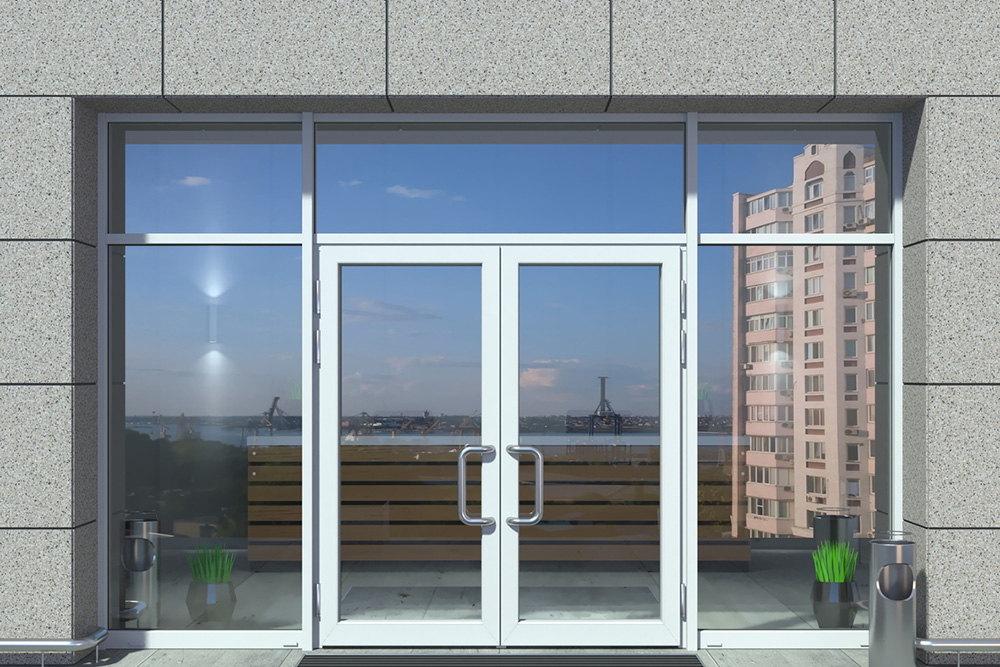
Shopfront door hardware is the collective term for the mechanical components that let a commercial entry open, close, latch, and lock correctly. In most cases, it’s not the door itself that fails — it’s one specific part. We repair and replace:
- Door closers, which control how the door swings shut and how firmly it latches
- Mortice locks and cylinders, including rekeying for keyed-alike systems across multiple tenancies
- Panic bar hardware, for fire egress on public-facing doors
- Floor springs and pivot hinges, which carry the weight of heavier glass and aluminium doors
- Patch fittings on frameless glass panels — the corner brackets that hold the glass in place
Because we carry the most common components on the van, most repairs are diagnosed and completed in the same visit — and where a door is used for fire egress, we make sure the hardware still meets that requirement once the repair is done.
Common Shopfront Door Problems We Fix
Shopfront doors take a heavier daily workload than almost any other door on a property — a busy retail entry can open and close hundreds of times a day. Here’s where that wear typically shows up first.
Hinged Shopfront Doors
Hinged glass and aluminium entry doors rely on the closer and floor spring to open smoothly and close securely. When either wears out, the door can swing too fast, fail to latch, or drag on the floor. We repair and replace both, along with worn hinges and misaligned locks.
Sliding Shopfront Doors
Sliding glass shopfronts — common in retail strips and shopping centre tenancies — run on bottom roller assemblies carrying the full weight of the panel. Worn rollers or a scored track cause grinding, dragging, or jumping; left alone, the panel eventually drops. We service the full range of aluminium sliding door repairs, including roller replacement and track servicing.
Bi-Fold & Stacker Shopfront Doors
Bi-fold and stacker systems are common in cafes and restaurants opening onto outdoor seating, and they carry some of the highest cycle loads of any commercial door. We repair and adjust bi-fold door hardware to keep panels folding and sliding cleanly. For back-of-house and staff areas with cavity sliding doors, we also handle cavity door hardware repairs.


Minimising Disruption to Your Business
We know a shopfront door can’t stay broken during trading hours. We work around your business, not the other way around — assessing the problem quickly, carrying common parts on every van, and completing most repairs within a few hours of arriving on-site. You’ll always know the likely timeframe before we start, so you can plan around it rather than be caught out.
How the repair process works
- Book. Call 1800 203 377 or request a same-day quote online. Tell us your door type, the specific fault, and your suburb. We’ll confirm a same-day or next-day appointment.
- Inspect. Our technician arrives at the agreed time, assesses the door and all hardware, and gives you a fixed price before any work starts. No hidden costs. No surprises.
- Repair. Most shopfront hardware faults are completed on the first visit during trading hours. We carry floor spring cassettes, patch fittings, closer units, mortice lock bodies, and roller assemblies for common commercial configurations on every van. Specialist parts for less common configurations are ordered and fitted on a return visit.
- Guaranteed. Every repair is backed by our workmanship guarantee.
Repair or replace?
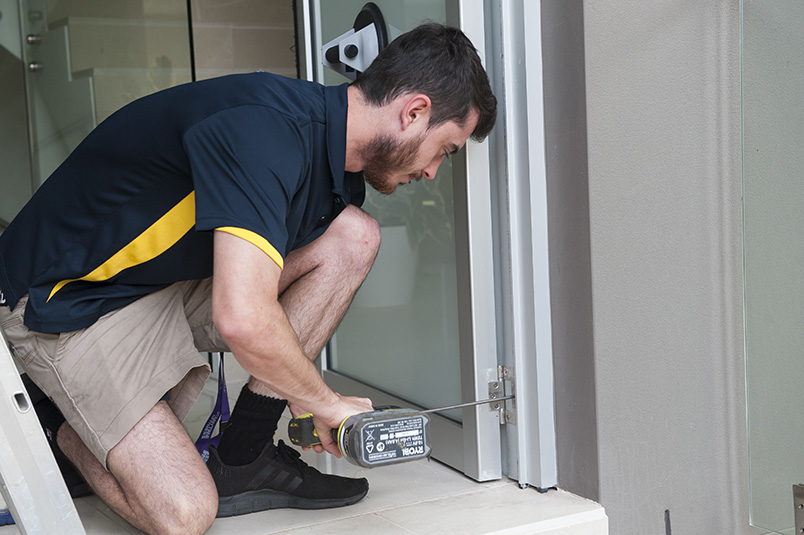
Most shopfront door hardware can be repaired or replaced at the component level without touching the door frame or glass. That covers the vast majority of faults we attend.
Full door replacement makes sense in three situations: the aluminium frame is corroded beyond re-glazing, the glass panel has been impacted, the structural integrity is compromised, or the hardware specification is so old that no matched parts exist. In those cases, we’ll give you a clear assessment and a replacement quote alongside the repair option. You won’t be pushed toward replacement if a hardware fix is the right call.
Who we work with
Retail tenants and business owners: Your shopfront door is the first and last impression a customer gets of your business. A door that sticks, slams, or won’t close properly damages that impression before they’ve stepped inside. We prioritise same-day response for commercial door faults and work during trading hours wherever possible. Fixed price before we start. No call-out fee surprises.
Property managers and building owners: Commercial strata buildings and mixed-use properties typically have multiple shopfront tenancies, each with its own door hardware specification. Through our strata door repair and maintenance service, we coordinate multi-tenancy jobs, provide full documentation for your records, and can schedule preventive maintenance visits to service door hardware before it fails.
Hospitality and retail fit-out managers: Bi-fold and stacker shopfront systems in cafes and restaurants carry the highest cycle loads of any commercial door configuration. A bi-fold set that doesn’t fold cleanly affects the ambience, the airflow, and the safety of your premises. We specialise in servicing and repairing these systems with minimal disruption to service.
Cost guidance
Most shopfront door hardware repairs in Sydney fall in the following ranges:
Floor spring replacement: $280–$480, depending on spring specification and access difficulty at the threshold. Patch fitting replacement: $180–$320 per fitting, depending on glass thickness and fitting specification. Door closer repair or replacement: $220–$420, depending on closer type and configuration. Mortice lock body and cylinder replacement: $200–$380, depending on lock specification and whether rekeying is required. Sliding door roller replacement on a commercial panel: $240–$420, depending on panel weight and track condition. Pull handle or push bar replacement: $150–$280 per assembly, depending on glass door type.
All prices are fixed-quote before work begins. The inspection fee is a one-off charge. If we’re repairing on the same visit, it’s folded into the job cost.
Frequently Asked Questions
Can you repair our shopfront door without closing the business?
In most cases, yes. Shopfront hardware repairs are usually completed within a few hours, and we carry the most common components on every van, so a second visit usually isn’t needed.
What shopfront door hardware do you repair?
Door closers, mortice locks and cylinders, panic bar hardware, floor springs, pivot hinges, and patch fittings, across hinged, sliding, and bi-fold shopfront configurations.
Is a broken shopfront door closer a security risk?
Yes. A closer that won’t hold the door shut, or a lock that no longer engages properly, leaves the premises exposed outside trading hours. We treat these as priority repairs.
Do you supply the hardware, or do we need to source parts ourselves?
We supply and fit all hardware ourselves, matched to your existing door and lock system — which matters most for keyed-alike security systems shared across multiple tenancies.
Do you work with strata and body corporate managers for commercial units?
Yes. We work directly with facility and body corporate managers on commercial and retail door repairs, scheduled around tenancy and building access requirements.
Service areas
We repair shopfront door hardware across Greater Sydney, including:
- Sydney CBD and Haymarket — high-traffic retail and hospitality entries, glass lobby doors in commercial strata buildings, and bi-fold cafe and restaurant fronts.
- Inner West — retail strips in Newtown, Leichhardt, and Glebe; cafe bi-fold systems on King Street and Parramatta Road; mixed commercial and strata tenancies in Marrickville.
- Eastern Suburbs — beachside retail on Campbell Parade and Hall Street in Bondi; harbourside commercial entries in Paddington and Double Bay; high-traffic hospitality bi-folds in Surry Hills.
- North Shore and Northern Beaches — retail and hospitality entries in Mosman, Neutral Bay, and Manly; coastal-exposed hardware with accelerated corrosion from salt air; commercial strata buildings along the Pacific Highway.
- Hills District and Western Sydney — commercial and industrial shopfront entries in Parramatta, Castle Hill, Norwest, and Penrith; large-format retail and warehouse entry doors.
Get Your Shopfront Doors Fixed in Sydney with Lock & Roll
Don’t let a broken shopfront door sit as a security risk or a bad first impression. Call 1800 203 377 or request a commercial quote, and we’ll get your entry working properly again.


